EmoBeat
A wearable solution that utilizes biometric data and emotion to address the problem of song recommendations not matching young adults' preferences.
↓ View More
Overview
By participating in the Amazon Music Design Challenge, we proposed a futuristic wearable solution aimed at utilizing biometric data and emotional analysis to enhance the music streaming experience of young adults by addressing the issue of song recommendations not aligning with their preferences.
Duration
Feb 2023 (3 weeks)
Team
Shan Chang
Cathy Hu
Sharon Yuxin Tao
Guillermo Ramirez
My Role
Project Manager & UX designer
Secondary Research
The Challenges
In today's world, we have access to millions of songs; but with this abundance of options, it is still hard for people to find new music that they really like from streaming platforms, despite using algorithms to help them.
47%
of music listeners discover new music through word-of-mouth recommendations.

64%
of music listeners find it difficult to discover new music that they like.

12%
of the tracks available on streaming services are streamed by listeners.

How might we help young adults find music that resonate with them?
The Solution
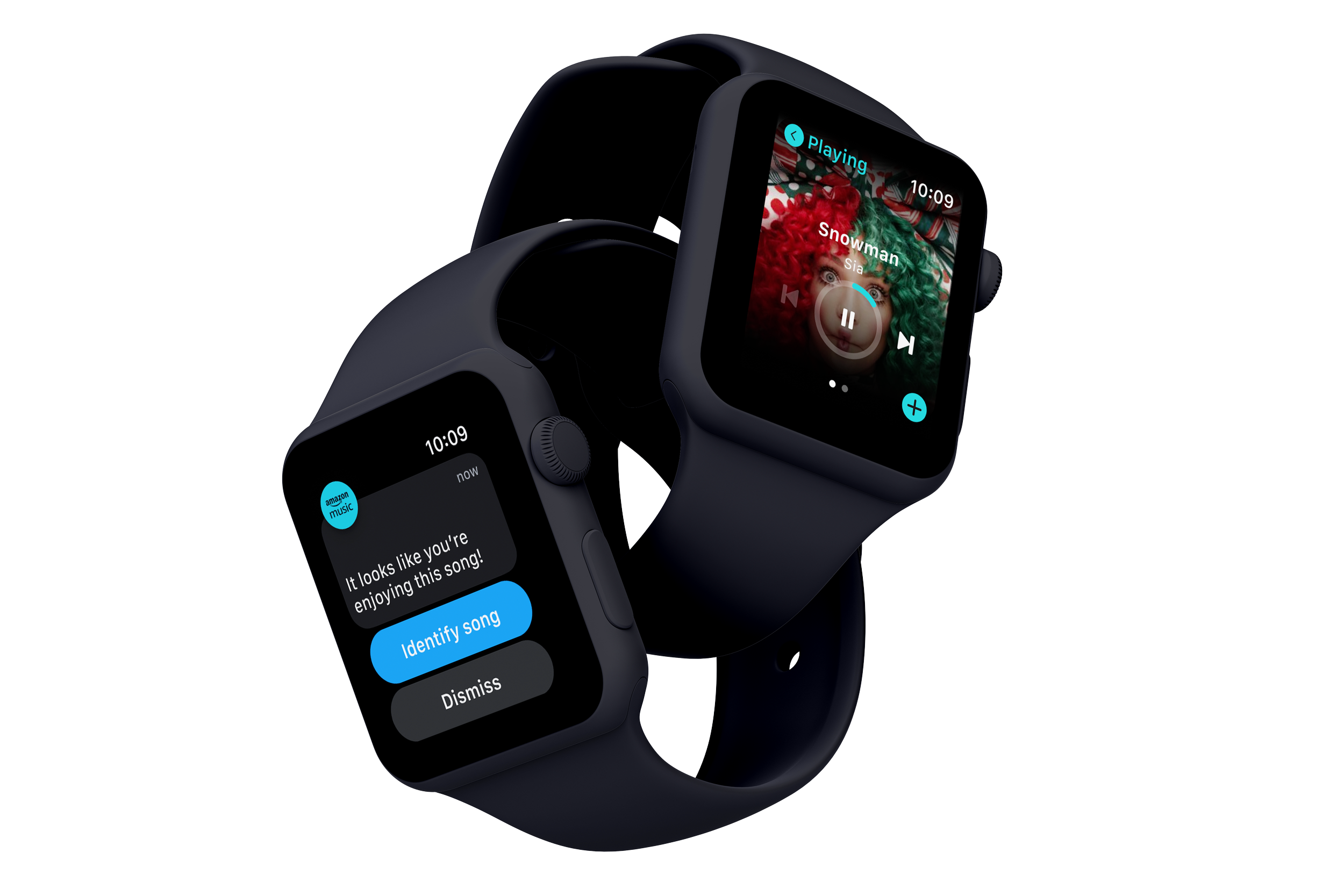
EmoBeat is a solution that uses wearable devices to capture users' emotions and movements.
By leveraging biometric technology, our system detects changes in heart rates based on emotions and gestures. We then use this data to enhance the user's music experience with personalized music recognition in different scenarios.
Storyboard
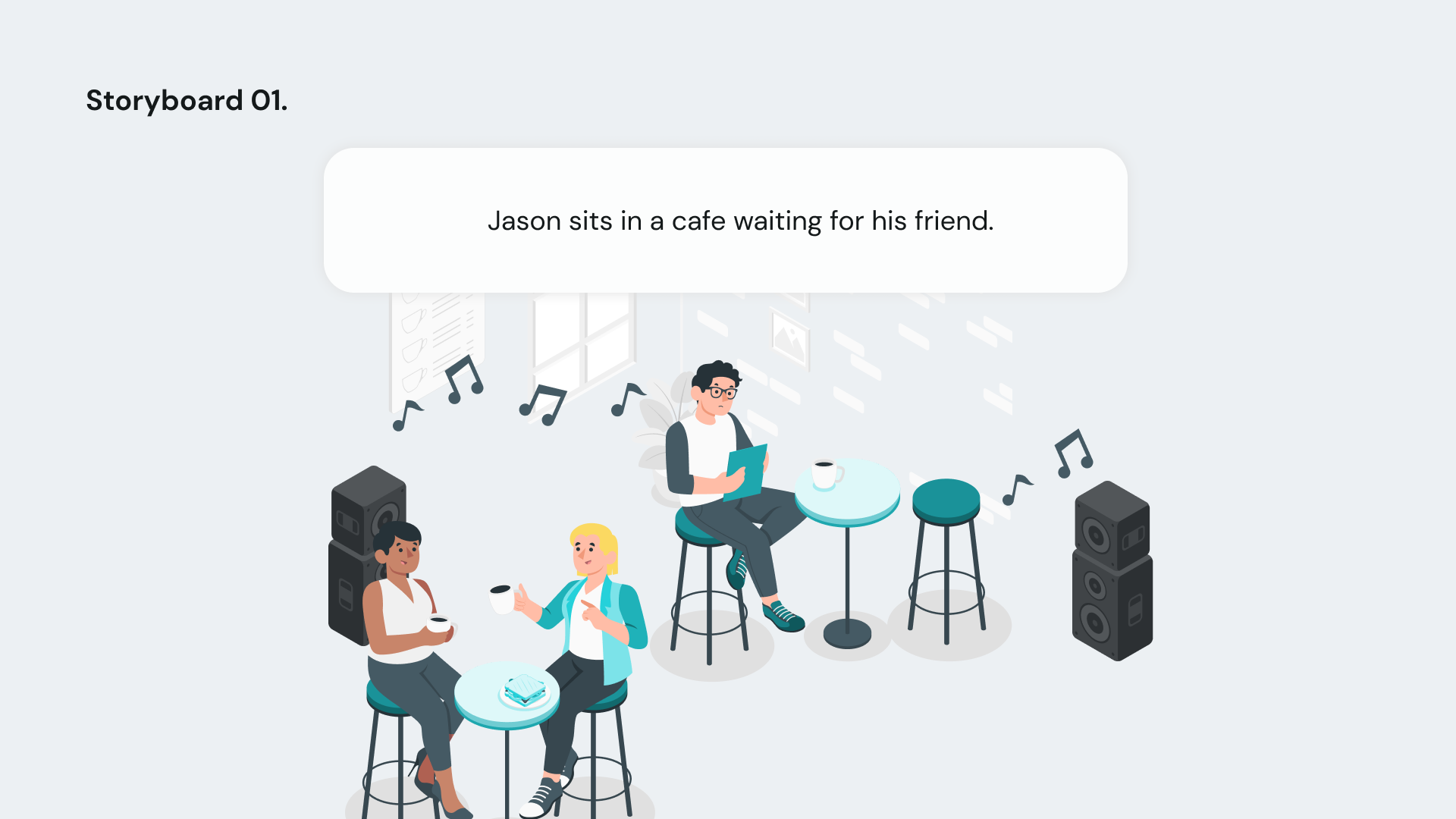
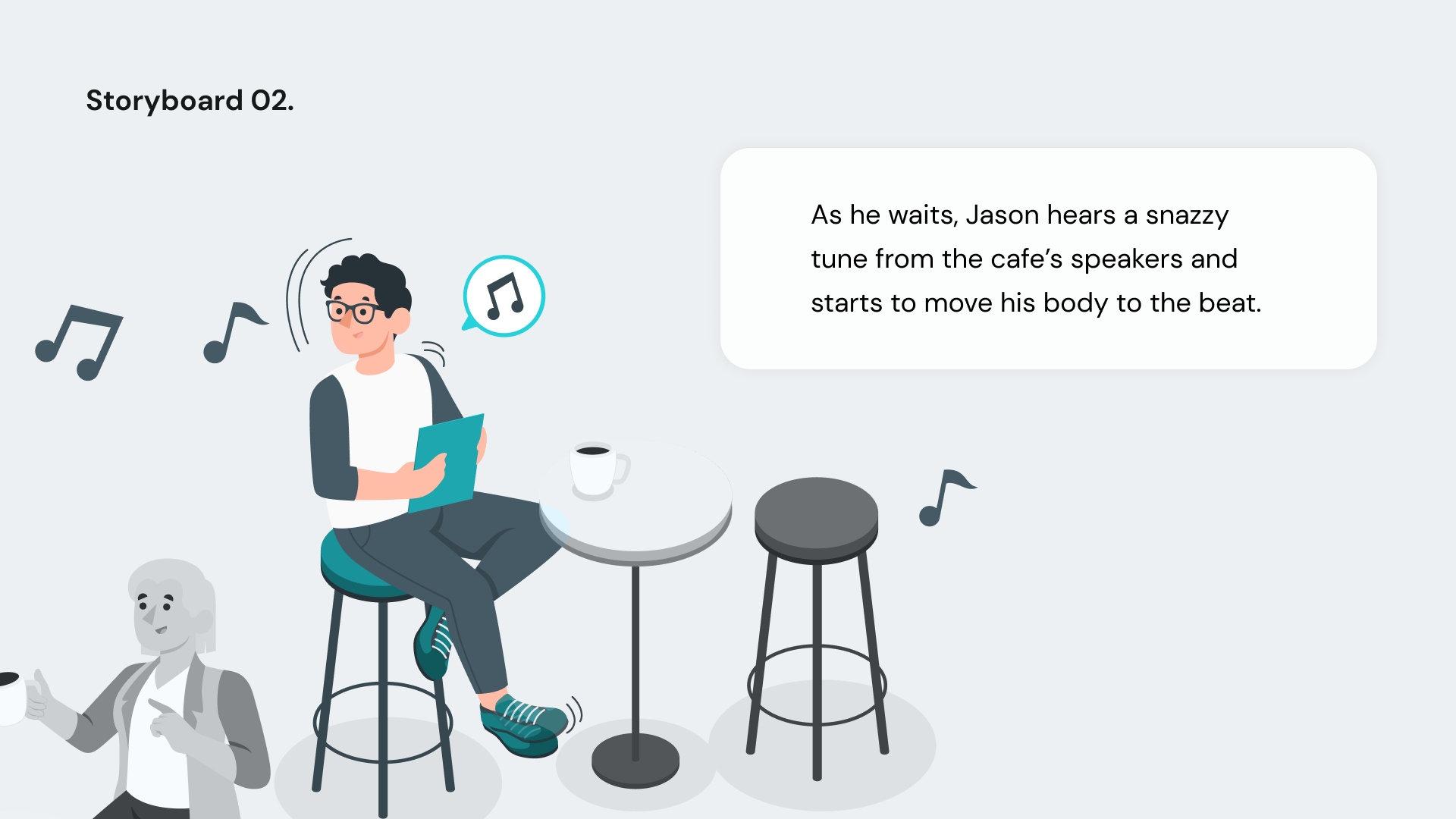
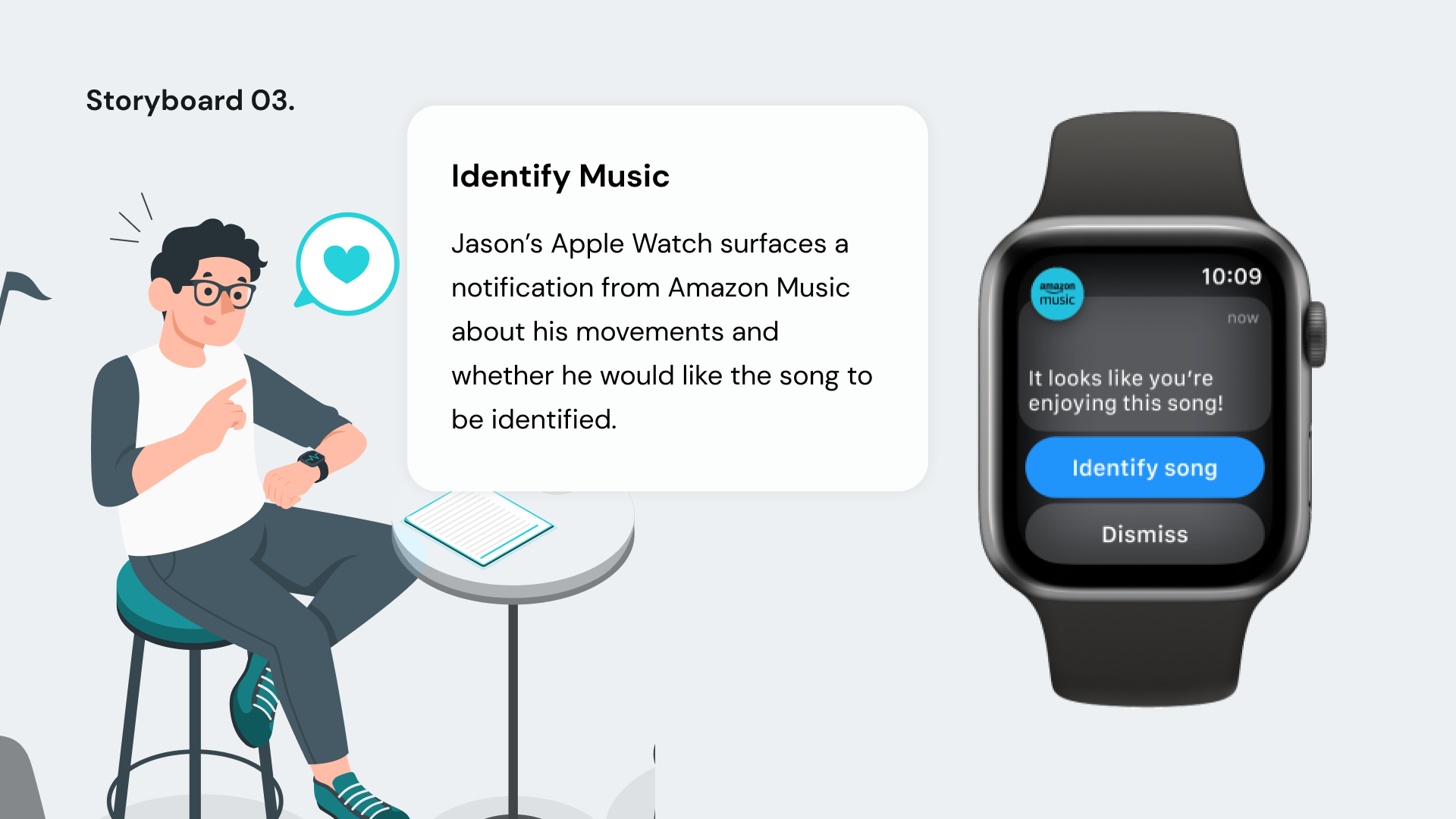
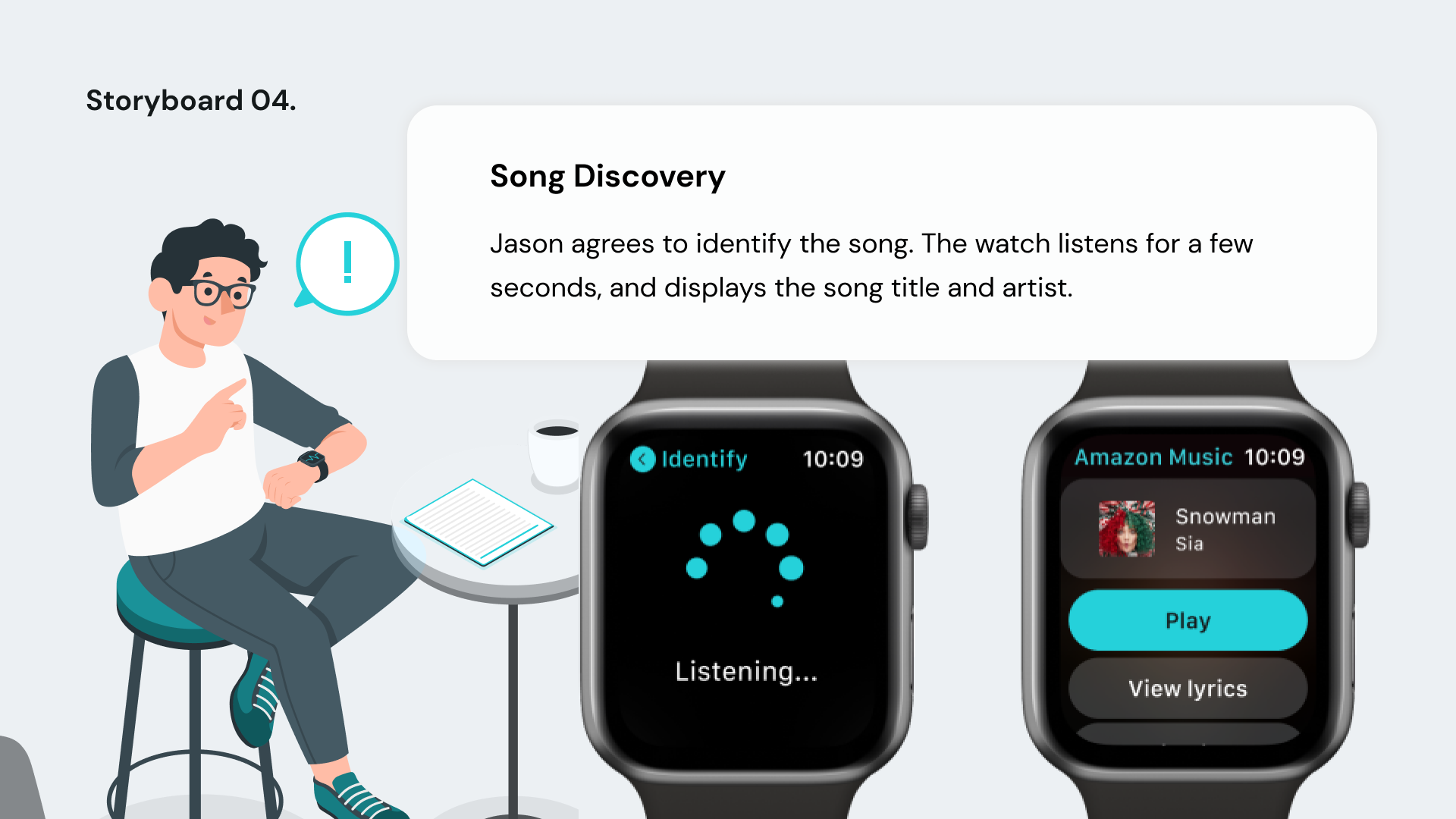
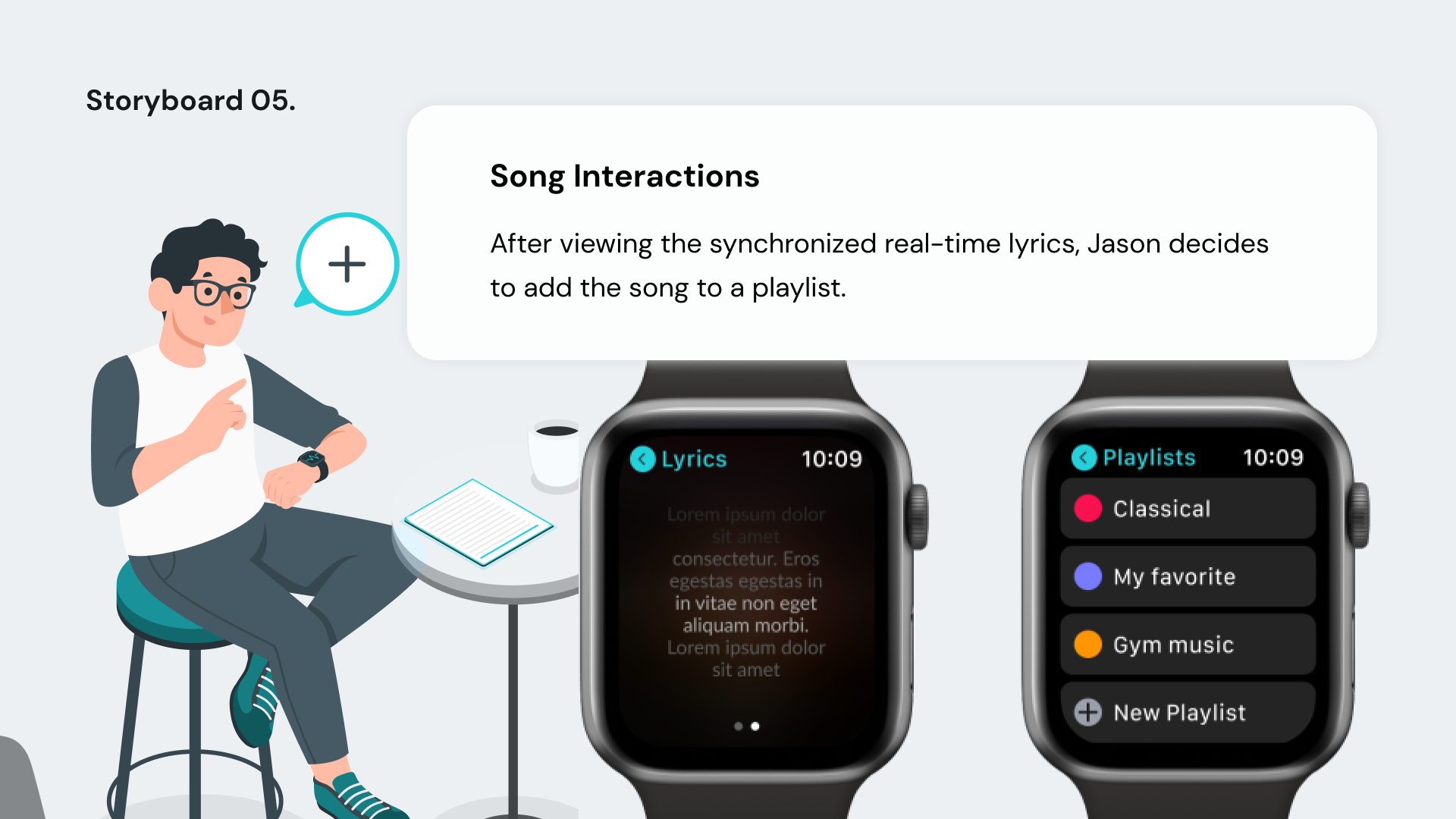
We used a storyboard to see how the actions and feelings would start the music discovery at a cafe when a Gen Z person is waiting for their friends.
Research
User Interview
To learn about people’s experience using music streaming services and how they discover new music, we conducted user interviews with 9 participants.
Our participants are:
People in their 20s (Gen Z)
Tech-savvy
Comfortable with using digital platforms for entertainment
Listen to music more than once a day
Use streaming music platforms to listen to music

What They Are Saying
“Spotify doesn’t do a great job of recommending me music that I like.”
— Interviewee #1
“The only way I find good songs now is from my friends or from music playing in cafes.”
— Interviewee #2
“How can I find new songs that I really like and enjoy easily?”
— Interviewee #3
Interview
Key Insights
After synthesizing our findings by Affinity Mapping, we found a few key takeaways.
Using these insights, we began exploring emerging technologies that could provide a more intuitive and user-friendly way for users to discover new music in the competitive music market.

Recommendations Don't Match User Preferences
Interviewees are used to listening to songs that match their current mood and situation.

Public Influences Shape Music Discovery
Interviewees are usually exposed to new music in public or get recommendations from surrounding friends.

Want An Easy Way to Find New Music
Most interviewees use Shazam or type in lyrics to identify new songs because they are not able to recognize them.
How might we help Gen Z to discover new music that matches their current moods in an easy way?
Comparative Analysis
We compared different music streaming platforms to find ways to help users discover music that matches their emotions.
Users we talked to were unaware of mood-based playlists on music platforms and didn't find their recommendations accurate, even though most platforms create playlists and suggestions based on their listening history.
Hence, it might be useful to explore ways to actively detect a user's mood to suggest songs that fit their emotions.

Ideation
Futuristic Technology Hypothesis
To create an innovative solution for the next five years' market, we decided to research how emerging technology may be involved in the music market.

Wearable technology
It is getting better at tracking health data and detecting motion actively. Wearable devices will become even more widespread and be able to detect emotions from biometrics like heart rate.

Artificial intelligence (AI)
With OpenAI's continued expansion, it's not difficult to imagine a future where AI integrates biometrics to connect users' listening habits with their emotional responses to songs.
Sketching
We recognized that AI and wearable devices could aid users in finding music that aligns with their moods.
So, we began brainstorming and sketching to examine how these technologies, in conjunction with Amazon Music, could create a more user-friendly and intuitive experience.
We combined two categories from our sketches to create our final solution - to use wearable devices to identify biometrics and emotions, and have AI add music to the playlist that the user might enjoy.
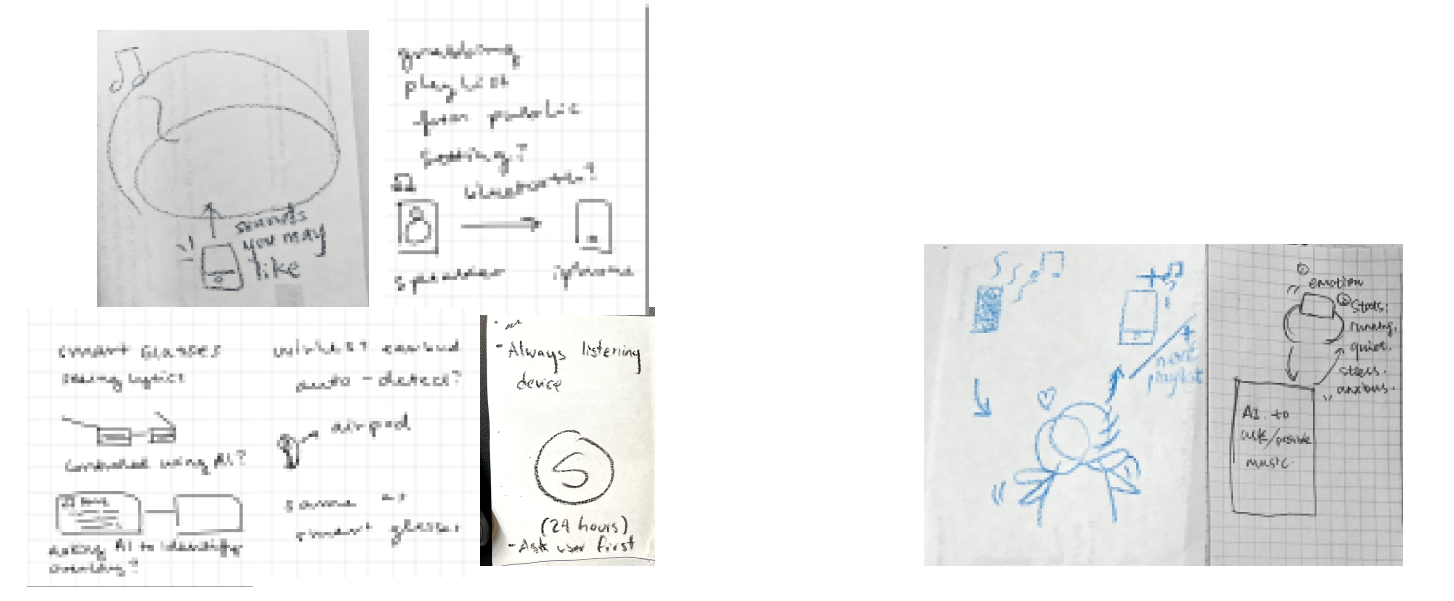
Utilizing AI to match music based on the user's current emotion
Wearable devices with Shazam feature
Design
Hi-Fi Screens
We developed a hi-fi prototype to collect feedback and test the concept of our idea, which involves using wearable technology and AI to identify emotions. However, this feature has not yet been developed, we plan to propose the idea to Amazon Music for potential implementation in the future. The hi-fi prototype will be available for future testers to interact with.
Reflection
What I learned
Bold hypothesis, cautious verification
Hypotheses can aid in tackling challenges in the design process, especially for this futuristic design challenge. However, it's crucial to rigorously validate and test them to ensure that our decisions are grounded in reliable data.
Get comfortable with ambiguity during the research phase
Initially, I struggled with the ambiguity and lack of direction at the start of the design challenge. However, I now understand that embracing ambiguity can lead to creative and effective solutions for the issues we are investigating.
You may also like
-
![]()
Veticure
A mobile application that enables pet owners to access reliable pet health knowledge easily
-
![]()
Nearby Parking
A two-sided marketplace that connects people who want to rent out their idle parking spots with people who are looking for places to park.
-
![]()
Simula Design System
Crafting an atomic design system to address design inconsistencies and enhance accessibility.
-
![]()
Kazani Beauty
Evaluate and improve the usability issues on a hair beauty website to make users stay on the website and purchase.
-
![]()
Instant Mask Map
A mobile app that empowers Taiwanese people to improve their efficiency in searching for masks.